Every/each (day, month, ...) (まい)
when used as {毎|まい}, it denotes you do something every when (...).
毎朝散歩に出かけます。 Every morning, I go out for a walk.
毎日どこでご飯を食べますか。 Where do you eat every day?
It can only be used with days, months, etc
~~毎アニメ~~を見よう ~~毎旅~~に料理する
adding のように shows that it almost always happens.
毎日のようにポテトチップス食べてるから太ってきた。 Because I eat potato chips almost every day, I am getting fat.
渋谷のmeetupは毎週のように行っているよ。 I go to the shibuya meetups almost every week.
Set expressions
Other than the temporal repetitions, some generalising set expressions exist. Set expressions are: 毎度、毎回、(very formal {毎次|まいじ})
毎回参加します I participate every time.
毎次{密接|みっせつ}に連絡を取ります I'll be in close touch each time.
Whenever, with each (...) (ごとに)
Written as {毎|ごと}に. Should not be confused with With (...) attached to Its use is on the decline (rarer than まい), as it is a bit old-fashioned.
(...) occurs every time when (...)
For every constant A (place, point of time, or person), a repetition B occurs.
彼は週毎に4万円の稼ぎがあります He has earnings of 40 000 yen a week.
旅ごとに料理する Every time I travel, I cook.
there is a different (...) for every
For every variable A (place/person), a different thing exists.
歌手毎に、独創的な声があります。 Every singer has a different, distinctive voice.
Every nth
Every nth repetition, something happens. This means that the repetition itself is also counted! This is different from Every other nth
四年ごとに、オリンピックが開かれる。 Every four years, the Olympics are held (3 years without, then a year with games.) 🥇○🥇○🥇○🥇…
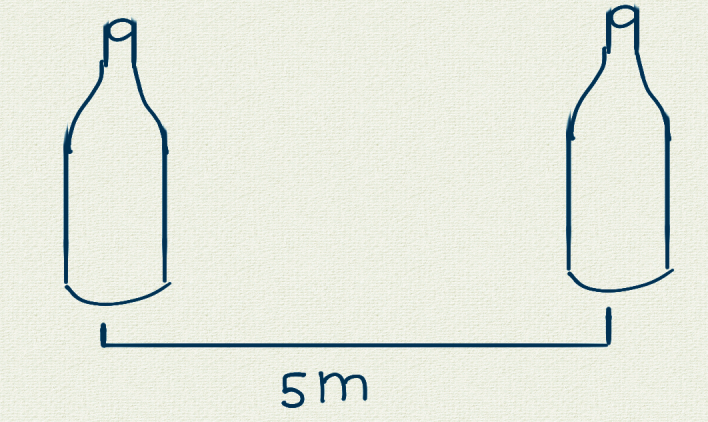
it can also be used for distance. It then implies going from the midpoint.
5メートルごとに瓶を載せる。 To put down a bottle every 5 meters
Each time (...), it becomes more (...)
As you repeat a certain constant A, a change progresses. (Rarely seen with verbs)
一雨ごとに、もっと暖かくなる。 Whenever there is rain, it gets warmer.